Introduction
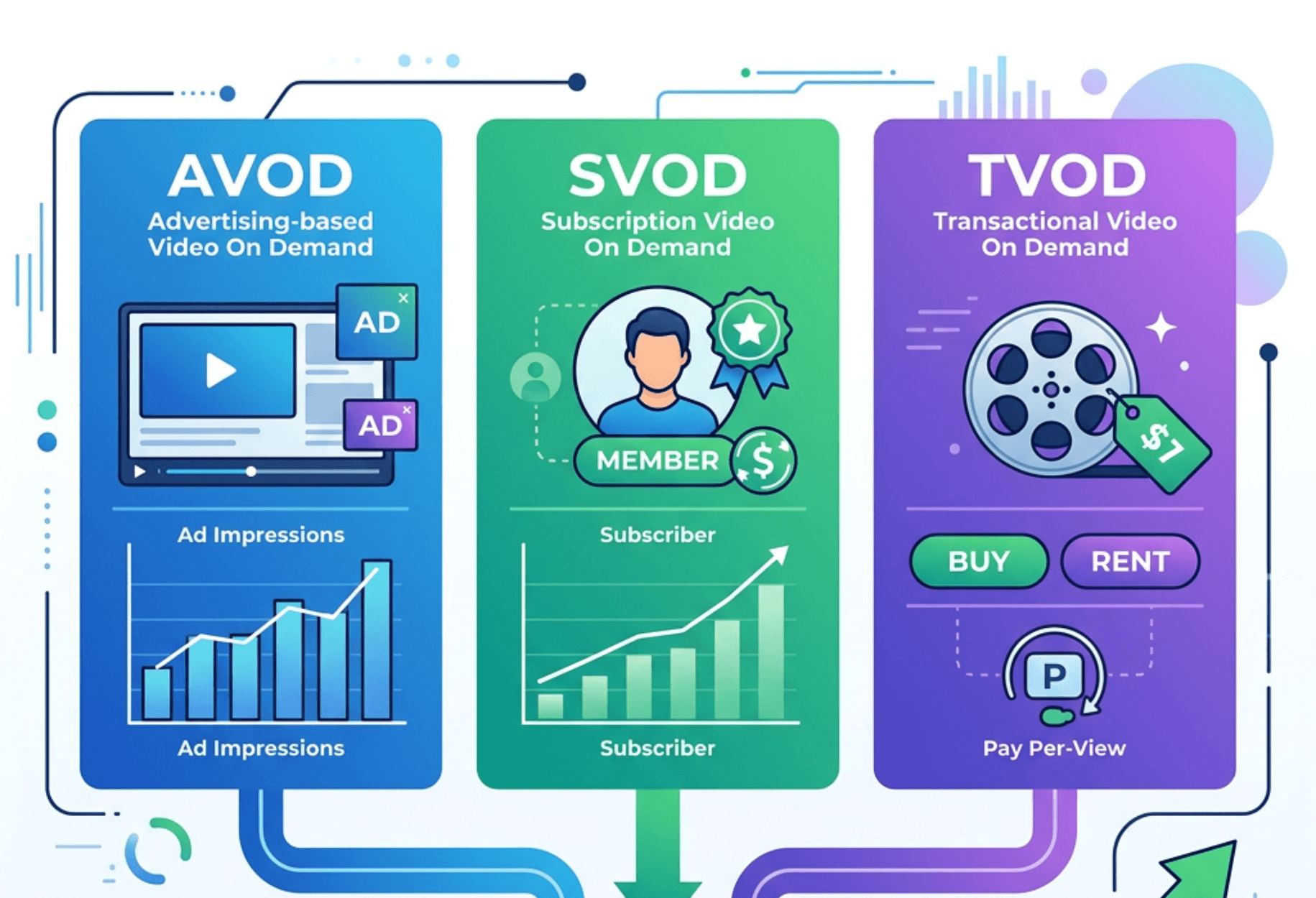
As the OTT streaming industry expands, content providers are increasingly seeking ways to monetize their services effectively. Whether you’re offering free content supported by ads or premium subscription-based content, selecting the right monetization model is crucial to ensuring profitability. In this blog, we will explore the three primary OTT monetization models AVOD, SVOD, and TVOD and explain how dcafe’s OTT streaming platform can help you optimize your revenue with these models.
Understanding the Monetization Models
To maximize revenue, OTT platforms need to offer flexible monetization models that cater to a wide range of audience preferences. dcafe makes it easy for businesses to implement and manage these monetization strategies seamlessly.
- SVOD (Subscription Video on Demand)
SVOD is one of the most popular and reliable monetization models, where users pay a recurring subscription fee to access a library of exclusive content. This model is perfect for platforms offering large catalogs of TV shows, movies, documentaries, or original programming. By adopting SVOD:
- Predictable Revenue: Businesses can rely on steady, recurring income. This helps with financial planning and forecasting, as user subscriptions provide regular cash flow.
- Exclusive Content: To succeed with SVOD, your platform needs to offer exclusive and high-quality content that justifies the subscription fee. Think Netflix, Amazon Prime, or Disney+, where subscribers are drawn to the vast and exclusive content library.
- Customer Loyalty: SVOD models encourage customer retention. Once users commit to a subscription, they’re more likely to stay as long as they feel the content adds value. This loyalty can lead to better customer lifetime value (CLTV).
With dcafe’s SVOD platform solutions, you can seamlessly manage and organize your content, implement subscription plans, and provide users with easy access to premium content.
- AVOD (Advertising Video on Demand)
For OTT platforms that want to reach a larger audience without charging users upfront, AVOD is a compelling option. With AVOD, users access content for free, but the platform generates revenue through advertisements placed within or around the content.
- Ad-Supported Free Content: AVOD is ideal for platforms targeting a mass audience who are not willing to pay for content but are open to watching ads in exchange for free access. This is how platforms like YouTube and Hulu operate.
- Targeted Ads: By leveraging ad targeting technologies, AVOD platforms can serve personalized ads to specific user segments, ensuring that advertisers reach their intended audience. This increases the overall value of the ads, thus increasing ad revenue.
- Lower Barriers for Users: AVOD platforms are more accessible to a wide range of viewers because they don’t require subscriptions or any upfront fees. This model works well for platforms offering a mix of content, such as news outlets, lifestyle channels, or sports networks.
dcafe supports AVOD monetization by integrating ad management solutions that allow you to target specific user groups with tailored ads. With the ability to track and optimize ad performance, you can ensure your AVOD model generates the most revenue possible.
- TVOD (Transactional Video on Demand)
TVOD offers a different approach by allowing users to pay for individual pieces of content, such as renting or purchasing movies, live events, or premium shows. TVOD is especially beneficial for one-off events or niche content that doesn’t require a subscription.
- Pay-Per-View: Users pay for access to a specific movie, event, or episode, typically on a rental or purchase basis. For example, sports events like boxing matches or concerts often use this model.
- Special Events and Niche Content: TVOD works well for platforms offering exclusive live events, such as pay-per-view sports or concerts. It’s also effective for renting out newly-released films or one-time shows.
- Flexibility for Consumers: TVOD provides flexibility for users who don’t want to commit to a monthly subscription. They can pay for content on demand, ensuring they only pay for what they watch.
dcafe’s TVOD platform solution allows you to manage individual transactions and ensure smooth payment processing. It also integrates seamlessly with your content catalog, offering a great experience for both the platform owners and the end users.
Hybrid AVOD/SVOD/TVOD Monetization Models
While many platforms focus on a single monetization model, dcafe allows you to combine multiple monetization strategies to create a hybrid model. This flexibility enables you to maximize revenue potential by catering to different audience segments.
- SVOD + AVOD: You can offer a basic, ad-supported version of your content for free while providing an ad-free, premium version for paying subscribers.
- SVOD + TVOD: If you offer a subscription-based service, you can also provide users with the option to purchase or rent exclusive content on top of their subscription.
- AVOD + TVOD: In this hybrid model, users can watch content for free, but when it comes to premium events or films, they will be offered the option to purchase or rent.
Conclusion
Selecting the right monetization model is key to the success of your OTT platform. Whether you opt for SVOD, AVOD, TVOD, or a hybrid approach, dcafe provides the tools and flexibility to optimize your revenue. By leveraging dcafe’s video CMS, cloud-based infrastructure, and monetization models, you can build a profitable and scalable OTT platform that caters to a wide variety of user preferences.