Introduction
One of the most significant challenges OTT service providers face is how to monetize their content. With the rise of streaming, AVOD, SVOD, and TVOD are the most commonly used monetization models. In this blog, we will break down the pros and cons of each model and explain how OTT streaming monetization platforms can help maximize your revenue.
SVOD: The Subscription Model
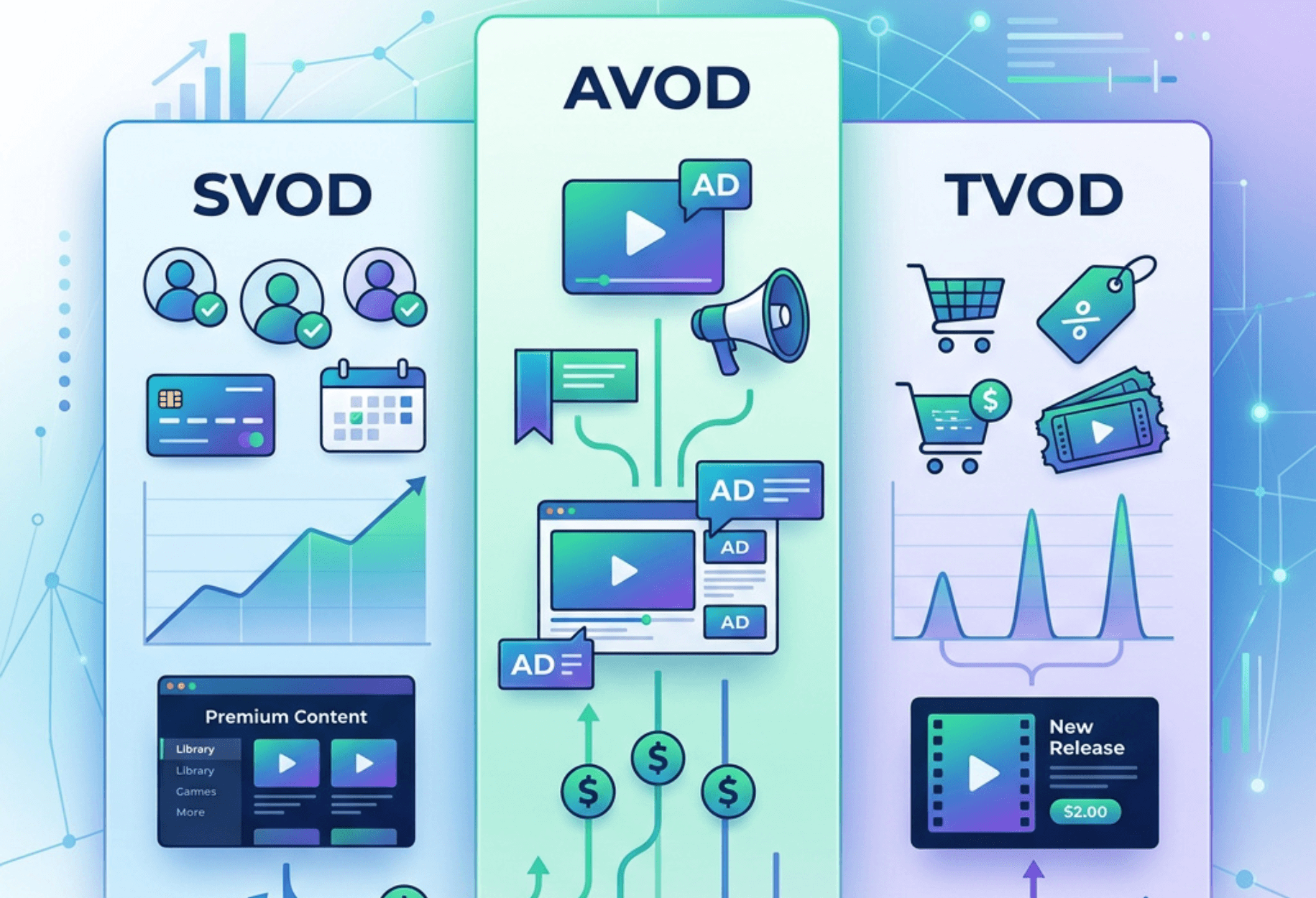
SVOD (Subscription Video on Demand) is one of the most widely used monetization models, particularly for platforms offering exclusive content. In SVOD platform solutions, users pay a fixed monthly or yearly subscription fee in exchange for access to a wide range of content. This model is great for businesses offering a large content library, such as movies, TV shows, and exclusive live events.
By implementing SVOD monetization, OTT platforms can ensure a steady revenue stream, helping businesses predict income more accurately. The key to success with SVOD is providing enough exclusive and high-quality content to justify the recurring payment.
AVOD: Ad-Based Revenue
AVOD (Advertising Video on Demand) is another popular monetization model, where content is provided for free but is interrupted by ads. This model is ideal for businesses that want to reach a wider audience without charging users. By integrating an OTT streaming monetization platform, you can serve targeted ads to users, generating income while keeping the platform free for consumers.
For those offering live streaming solutions or regional sports networks, AVOD offers an excellent way to monetize content, particularly when live events are involved. Viewers are often more willing to tolerate ads when they have access to high-quality, free content.
TVOD: Transactional Revenue
TVOD (Transactional Video on Demand) allows users to pay for individual pieces of content, such as renting or purchasing movies or live events. This model is well-suited for on-demand content that is not regularly available or for special events like pay-per-view sports.
By incorporating TVOD platform solutions, OTT providers can offer viewers the option to rent or buy content on a per- title basis. This flexible payment method appeals to users who prefer to pay for specific content rather than committing to a subscription.
AVOD/SVOD/TVOD Hybrid Monetization
The ideal OTT platform often combines all three models AVOD, SVOD, and TVOD allowing for greater revenue potential. By offering free content with ads (AVOD), premium subscription options (SVOD), and transactional rentals (TVOD), OTT providers can diversify their income streams and attract various audience segments.
Conclusion
Understanding the different OTT monetization models is essential for creating a profitable streaming platform. Whether you choose SVOD, AVOD, TVOD, or a combination, partnering with the right OTT streaming monetization platform ensures that your service can generate sustainable revenue. Dcafé streaming platform provides comprehensive tools to integrate these models seamlessly, helping you unlock the full potential of your content.